2026 Fall Clinical™ Dermatology Conference Highlights
Thursday, October 8, 2026
Catch a glimpse of the highlights from today's session and the networking that makes the 2026 Fall Clinical™ so unique! Watch our Day 1 recap video for a high-speed look at the morning sessions, top expert interviews, and clinical pearls.
Click here to view and download the rest of the photos!

Day 1 Video Recap
Christopher G. Bunick, MD, PhD, Diego Ruiz Dasilva, MD, and Ruth Ann Vleugels, MD, MPH, MBA discussed the role of upadacitinib and abrocitinib in moderate-to-severe refractory atopic dermatitis (AD), addressing when to transition patients to Janus kinase inhibitors (JAKis), how to counsel on cardiovascular, thromboembolic, and malignancy risk, and how to dose and prescribe these agents in practice.
Edward Lain, MD, MBA, Linda F. Stein Gold, MD, and Ronald Vender, MD reviewed the mechanism, efficacy, and safety of the approved tyrosine kinase 2 (TYK2) inhibitor deucravacitinib and pipeline agents zasocitinib and envudeucitinib in psoriasis (PsO), drawing on comparative trial data and real-life cases to help clinicians choose among oral options for PsO.
Christopher G. Bunick, MD, PhD reviewed the latest updates in acne management, combining efficacy data, mechanistic insight, and real-world examples to help clinicians refine their treatment approach.
Benefits of Concomitant Treatment with Ixekizumab and Tirzepatide for Patients with Psoriatic Disease and Overweight/Obesity: An Overview of Results from the TOGETHER Trials
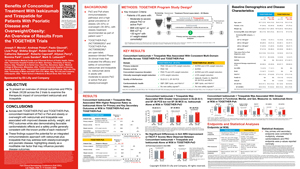
Authors: Joseph F. Merola, Andreas Pinter, Paolo Gisondi, Lluís Puig, Shikha Singla, Rubén Queiro Silva, Catherine Bakewell, Roberto Caporali, Allyson Perry, Bomina Park, Louis Sanden, Mark G. Lebwohl
The open-label, assessor-blinded phase 3b TOGETHER-PsO and TOGETHER-PsA trials evaluated the therapeutic impact of concomitant ixekizumab and tirzepatide versus ixekizumab alone at week 36 in patients with psoriasis (PsO) or psoriatic arthritis (PsA). In TOGETHER-PsO, combination therapy was associated with higher rates of simultaneous 100% improvement in the Psoriasis Area and Severity Index (PASI 100) and ≥10% weight reduction (27.1% vs 5.8%) and of PASI 100 alone (40.6% vs 29.0%), while in TOGETHER-PsA it was associated with higher rates of simultaneous ≥50% improvement in American College of Rheumatology response criteria (ACR50) and ≥10% weight reduction (31.7% vs 0.8%) and of ACR50 alone (33.5% vs 20.4%). Combination therapy was also associated with greater improvements in the Dermatology Life Quality Index (DLQI), the 36-Item Short Form Health Survey Physical Component Summary (SF-36 PCS), and functional, mental, and quality of life measures. No significant differences were observed between groups for the SF-36 Mental Component Summary (MCS), Itch Numeric Rating Scale (NRS), or Functional Assessment of Chronic Illness Therapy-Fatigue (FACIT-F) scores.
Long-Term Efficacy and Safety of Upadacitinib Through Week 76 in Adults and Adolescents With Non-Segmental Vitiligo: Results From 2 Phase 3 Studies (Viti-Up)
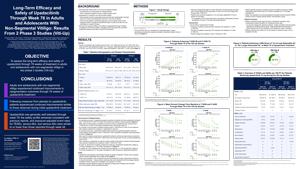
Authors: Seemal R. Desai, Irina Turchin, Pearl Grimes, Mehdi Rashighi, Linda Stein Gold, Andrew Alexis, Xiaoqiang Wu, Smitha Suravaram, Sylvester Uwumarogie, Bethanee J. Schlosser, Stavonnie Patterson, Benjamin Ehst
Long-term data from the Viti-Up-1 and Viti-Up-2 phase 3 extension trials evaluated upadacitinib through 76 weeks of treatment in adults and adolescents aged 12 years and older with non-segmental vitiligo, showing continued improvement from week 48 to week 76 with a higher number of patients achieving VASI-50 and VASI-75. Patients initially randomized to placebo achieved repigmentation comparable to the original upadacitinib arm after crossover, suggesting that delayed initiation, as may occur after prior topical or phototherapy failure or access-related delays, does not compromise therapeutic response. Exposure-adjusted adverse event rates remained similar to or lower than those reported through week 48, indicating that toxicity did not accumulate with longer exposure. Common JAK-class safety signals were present at expected levels, with herpes zoster, hepatic disorders (mostly laboratory elevations), neutropenia, lymphopenia, and anemia occurring most frequently.
Friday, October 9, 2026
Check out our Day 2 recap video for an inside look at the breakthrough clinical updates and the vibrant energy in the exhibit hall.
Click here to view the rest of the photos!
Day 2 Video Recap
April W. Armstrong, MD, MPH, Tina Bhutani, MD, and E. James Song, MD reviewed approved and emerging oral therapies for psoriasis, including apremilast, deucravacitinib, icotrokinra, and the investigational tyrosine kinase 2 (TYK2) inhibitors envudeucitinib and zasocitinib, to help clinicians build patient-centered treatment plans.
April W. Armstrong, MD, MPH, Raj Chovatiya, MD, PhD, MSCI, and Lisa A. Swanson, MD reviewed how to individualize atopic dermatitis therapy using clinical and patient-reported factors, covering cross-trial comparisons, head and neck disease, skin of color, durability of response, pediatric considerations, and practical counseling pearls.
Iltefat Hamzavi, MD, and Jennifer Hsiao, MD, shared practical strategies for managing hidradenitis suppurativa beyond drug selection, from building patient trust and screening for comorbidities to dual targeted therapy, surgical options, and wound care.
Lebrikizumab Provides Clinically Meaningful Response in Face and Hands in Adults and Adolescents with Moderate-to-Severe Atopic Dermatitis: ADhope 1 Study
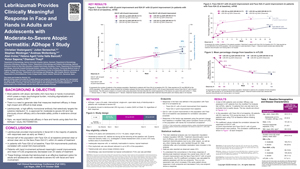
Authors: Christian Vestergaard, Julien Seneschal, Stephan Weidinger, Andreas Wollenberg, Alan Irvine, Helena Agell, Júlia Valls Bancell, Victor Sapena, Diamant Thaçi
Facial and hand involvement are common in atopic dermatitis (AD) and carry a significant psychological burden, yet data on treatment efficacy in these high-impact, difficult-to-treat areas remain limited, a gap the 24-week, open-label ADhope 1 study sought to address by evaluating lebrikizumab in adults and adolescents with moderate-to-severe AD. Lebrikizumab improved facial AD in the majority of patients, with responses seen as early as week 2 and almost half of patients with baseline facial involvement achieving clear or almost clear facial skin, defined as a facial Investigator's Global Assessment (IGA) score of 0 or 1, by week 24. Improvements on the face positively correlated with overall IGA improvements, while patients with hand involvement experienced progressive reductions in the modified Total Lesion Symptom Score (mTLSS) over 24 weeks. These findings support lebrikizumab as an effective treatment option for adults and adolescents with moderate-to-severe AD affecting the face and hands.
Two Phase 3, Randomized, Placebo-Controlled Trials of Povorcitinib for Nonsegmental Vitiligo: Results From STOP-V1 and STOP-V2
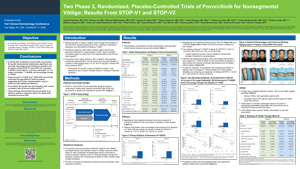
Authors: Khaled Ezzedine, Harvey Lui, Viktoria Eleftheriadou, Seemal R. Desai, Thierry Passeron, Julien Ringuet, Nanja van Geel, Albert Wolkerstorfer, Charles Lynde, Matthias Augustin, José Luis López-Estebaranz, Pearl Grimes, David Rosmarin, Kurt Brown, Shaoceng Wei, Sunanda Karanam, Deanna Kornacki, Amit G. Pandya
Current approved repigmentation therapy for nonsegmental vitiligo (NSV) is limited to topical treatment of patients with ≤10% affected body surface area, leaving a need for effective systemic options in more extensive disease, a gap the phase 3 STOP-V1 and STOP-V2 trials addressed by evaluating the oral, selective Janus kinase 1 (JAK1) inhibitor povorcitinib 30 mg once daily in adults with moderate-to-severe NSV over 52 weeks. In both trials, povorcitinib achieved statistically significant and clinically meaningful improvements versus placebo, including ≥75% improvement in the facial Vitiligo Area Scoring Index (F-VASI75; 18.9% vs 6.8% and 18.9% vs 3.1%), ≥50% improvement in the total Vitiligo Area Scoring Index (T-VASI50), and facial Vitiligo Noticeability Scale (VNS) responses of "a lot less noticeable" or "no longer noticeable." Facial and total body repigmentation continued to improve through week 52 without plateau, suggesting further gains may be possible with longer treatment, and povorcitinib was well tolerated with results consistent with its known safety profile.
Saturday, October 10, 2026
Relive Day 3 through our recap video, featuring masterclasses, clinical pearls, and meaningful connections.
Click here to view the rest of the photos!
Day 3 Video Recap
Shawn Kwatra, MD and Michelle Tarbox, MD reviewed chronic spontaneous urticaria (CSU) pathophysiology and the mechanisms, efficacy, and safety of remibrutinib and dupilumab, the newest additions alongside omalizumab for antihistamine-refractory disease.
In a whirlwind, high-level session, James Q. Del Rosso, DO reviewed the latest therapeutic updates and pipeline agents across atopic dermatitis, psoriasis, hidradenitis suppurativa, and dermatomyositis, familiarizing clinicians with the rapidly expanding range of treatments for these conditions.
A multidisciplinary panel reviewed the systemic inflammatory links between psoriatic disease, obesity, and cardiometabolic comorbidities, discussing indications, durability, side effects, and emerging trial evidence for glucagon-like peptide-1 receptor agonists to improve both psoriatic and metabolic outcomes.
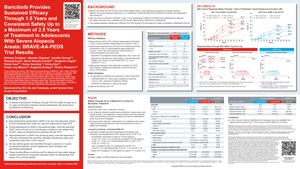
Baricitinib Provides Sustained Efficacy Through 1.5 Years and Consistent Safety Up to a Maximum of 2.5 Years of Treatment in Adolescents with Severe Alopecia Areata: BRAVE-AA-PEDS Trial Results
Authors: Brittany Craiglow, Manabu Ohyama, Jennifer Soung, Ohsang Kwon, David Saceda-Corralo, Benjamin Ungar, Naiem Issa, Karen Denning, Tuhina Das, Kristin Joy Meyers, Angelina Sontag, Thierry Passeron
Understanding whether hair regrowth is sustained over time is essential when choosing long-term therapy for adolescents with severe alopecia areata (AA), and the randomized, double-blind phase 3 BRAVE-AA-PEDS trial assessed maintenance of baricitinib efficacy through week 76 and safety for up to 2.5 years of treatment in this population. Among adolescents on baricitinib 4 mg who achieved a Severity of Alopecia Tool (SALT) score ≤20 at week 52, 92.7% maintained that response through week 76, and nearly all (95.8%) who achieved a deep, multi-site response (SALT ≤10 with no or minimal eyebrow and eyelash hair loss) sustained it. Most adolescents on baricitinib 2 mg with a deep, multi-site response at week 52 also maintained it (83.3%), although maintenance rates were numerically lower than with the 4-mg dose, and no new safety signals were identified, with height, weight, and body mass index trajectories consistent with age-related expectations. These durable efficacy outcomes and the absence of new safety signals support baricitinib as a long-term treatment option for adolescents with severe AA.
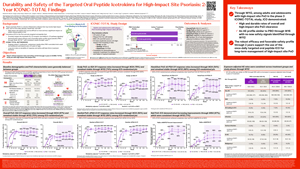
Durability and Safety of the Targeted Oral Peptide Icotrokinra for High-Impact Site Psoriasis: 2Year ICONIC-TOTAL Findings
Authors: Richard B. Warren, Eingun James Song, Edward Lain, Joseph F. Merola, Matthias Hoffmann, Robert Bissonnette, Yu-Huei Huang, Amy Paller, Jessica H. Rubens, Melissa Larick, Ming-Chun Hsu, Shu Li, Ya-Wen Yang, Cynthia M. C. DeKlotz, Melinda Gooderham
Building on previously reported 1-year results, the phase 3 ICONIC-TOTAL trial evaluated the durability and safety of icotrokinra, a once-daily oral peptide that targets the interleukin (IL)-23 receptor, through 2 years of treatment in adults and adolescents with plaque psoriasis (PsO) involving high-impact sites such as the scalp, genitals, hands, feet, and nails. Among patients randomized to icotrokinra, overall clear or almost clear skin (Investigator's Global Assessment [IGA] 0/1) was achieved by 67% at week 24 and remained stable at 70% through week 112, with similarly durable responses across high-impact sites: 74% for scalp (scalp-specific IGA 0/1), 89% for genitals (static Physician's Global Assessment of Genitalia 0/1), and 68% for hands and feet (Physician's Global Assessment of hands and feet 0/1). Nail PsO continued to improve through week 64 and remained stable through week 112 (71% mean improvement in modified Nail Psoriasis Severity Index), while the adverse event profile was similar to placebo through week 16, with no increase in exposure-adjusted rates and no new safety signals through 2 years. These findings support icotrokinra as a long-term oral treatment option for patients with high-impact site PsO.
Sunday, October 11, 2026
Relive the moments, insights, and connections that made Day 4 memorable.
Click here to view the rest of the photos!
Day 4 Video Recap
Roger I. Ceilley, MD shared practical pearls spanning the entire procedural experience, from anesthesia and patient positioning to wound closure, dressings, and postoperative care, offering takeaways every dermatology clinician can use to improve their practice.
James Q. Del Rosso, DO, David Cotter, MD, PhD, and Graham Litchman, DO, MS presented real-world cases of atypical presentations, from cutaneous signs of pediatric inflammatory bowel disease to complex chronic spontaneous urticaria and an elevated creatine kinase on a JAK inhibitor caused by hypothyroidism, reminding clinicians that diseases do not always follow the textbook.
Scott Elman, MD reviewed what has changed in recognizing, screening, and treating cutaneous lupus erythematosus and dermatomyositis, including emerging targeted therapies that are expanding options for patients.
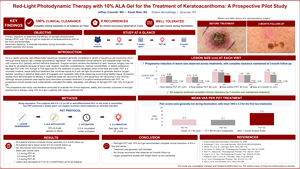
Red-Light Photodynamic Therapy With 10% Aminolevulinic Acid Gel Shows Lasting Efficacy for Treatment of Superficial Basal Cell Carcinoma in 1-Year Follow-Up of a Randomized, Vehicle-Controlled, Double-Blind, Multicenter Phase III Study
Authors: Todd Schlesinger, M. Shane Chapman, John H. Tu, Joel L. Cohen, John Strasswimmer, Nathalie C. Zeitouni, Abel Torres, S. Sasha Jazayeri, Mitchel P. Goldman, Sherrif F. Ibrahim, Edward L. Lain, Megan P. Couvillion, Suzanne Bruce, Vivian T. Laquer, C. William Hanke, David M. Ozog, Jane Schneider, Orit Markowitz, Brian Berman, Mark S. Nestor, Michael H. Gold, Girish S. Munavalli, Douglass W. Forsha, Daniel M. Siegel, David Mrohs, Beate Schmitz, Ruth Schäning, Jon Lyons, Montserrat Foguet, Matthias Lübbert, Hermann Lübbert, David M. Pariser
Red-light photodynamic therapy (PDT) with 10% aminolevulinic acid (ALA) gel was recently approved by the FDA for the treatment of superficial basal cell carcinoma (sBCC), making it the first and only approved PDT drug-device combination for skin cancer. This 1-year follow-up analysis provides long-term data on the efficacy of this approach in sBCC. After one or two PDT cycles, 83.4% of main target lesions treated with 10% ALA gel achieved initial clinical clearance, compared with 21.4% with vehicle, and clinical recurrence at 1 year was 40% lower than with vehicle. Treatment with 10% ALA gel also outperformed vehicle in clearance of additional target lesions and in aesthetic outcomes. Overall, these findings demonstrate that red-light PDT with 10% ALA gel offers effective and sustained clearance of sBCC lesions.
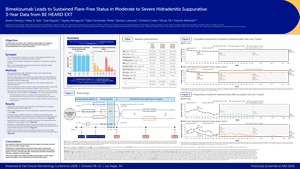
Bimekizumab Leads to Sustained Flare-Free Status in Moderate to Severe Hidradenitis Suppurativa: 3-Year Data from BE HEARD EXT
Authors: Steven Daveluy, Haley B. Naik, Ziad Reguiai, Sayaka Yamaguchi, Pablo Fernández-Peñas, Bartosz Lukowski, Christina Crater, Nicola Tilt, Antonio Martorell
Flares are a defining feature of hidradenitis suppurativa (HS), and reducing their frequency through timely, effective treatment is a key goal of disease management. This analysis of BE HEARD I and II and their open-label extension, BE HEARD EXT, evaluated flare outcomes over 3 years in patients with moderate to severe HS treated with bimekizumab, a selective inhibitor of interleukin (IL)-17A and IL-17F. Among patients remaining in the study, the cumulative proportion who stayed flare-free was 83.8% at week 48 and remained consistent through week 148 (86.1%), while the proportion experiencing a flare at a given visit decreased from 2.2% at week 48 to 0% at week 148. Patients with Hurley stage II disease had numerically lower flare rates than those with Hurley stage III through year 1, although low flare rates were achieved regardless of Hurley stage by year 3. These findings suggest that initiating bimekizumab in Hurley stage II may lead to more rapid control of inflammatory flares.