When the Hands Don’t Follow the Rest: Managing Chronic Hand Eczema Despite Systemic AD Control
Dr Jenny Murase presents a case of chronic hand eczema persisting despite well-controlled atopic dermatitis on dupilumab, highlighting the role of delgocitinib cream.
By Jenny Murase, MD
Case presentation and medical history summary
A 50-year-old woman of Filipino heritage presented with a long-standing history of atopic dermatitis and asthma, both dating back to childhood. Her atopic dermatitis had been well controlled for several years on dupilumab, which she initiated in May 2018 at a dose of 300 mg every two weeks.
Her past evaluation included extensive patch testing performed in May 2021 using the North American Contact Dermatitis Series, Emulsifier/External Agents Tray, Fragrance Tray, and Corticosteroid Tray. The only positive result was to bacitracin. She had also undergone food allergy testing, which identified allergies to seafood and nuts.
Over the course of her disease, she had used a variety of topical therapies for eczema management, including triamcinolone 0.1% ointment, clobetasol ointment, tacrolimus 0.1% ointment, and ruxolitinib cream. Despite overall disease control on dupilumab, she developed persistent, symptomatic hand dermatitis that proved more refractory to treatment.
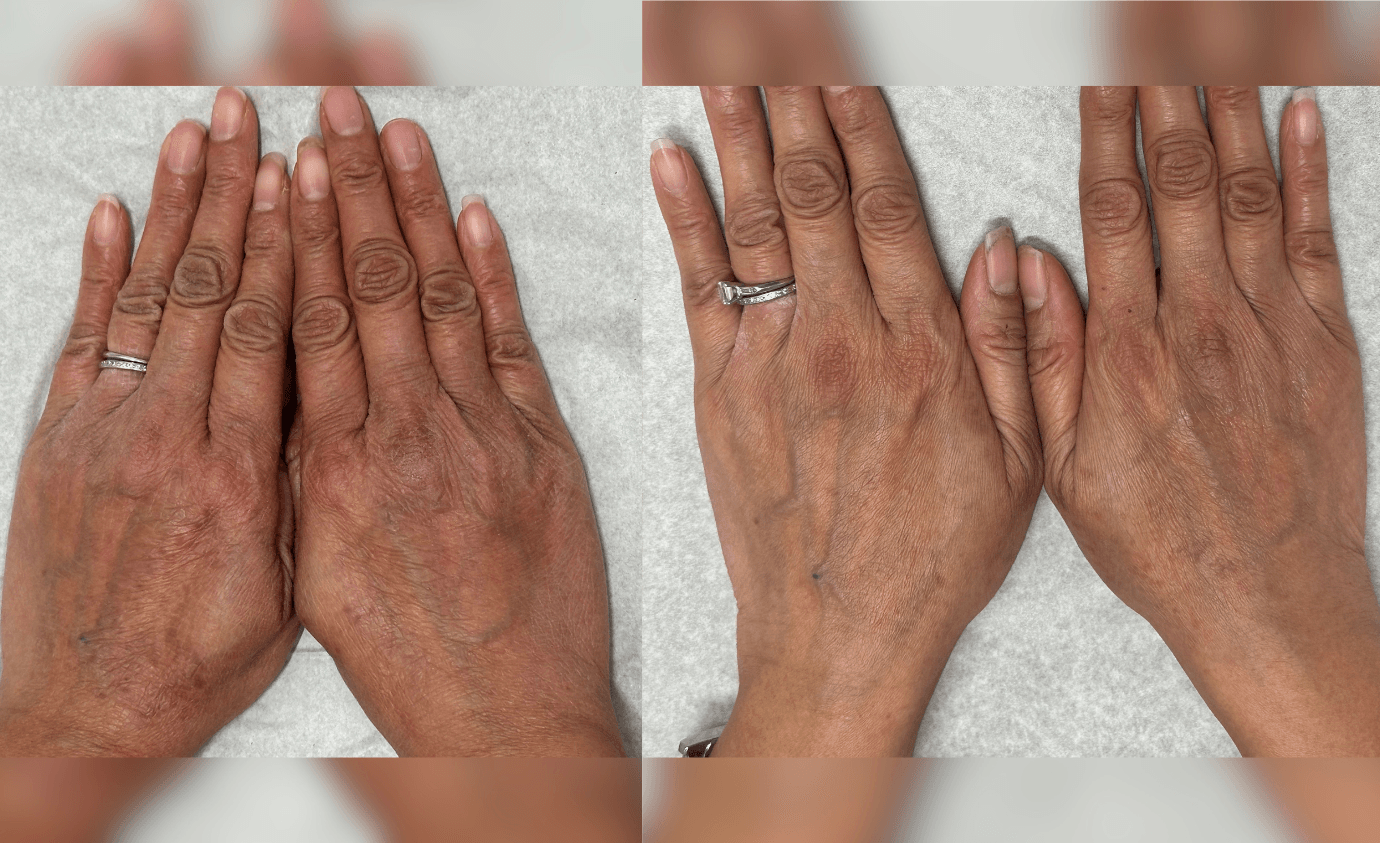
At a follow-up visit on December 9, 2025, the patient reported continued satisfaction with her global atopic dermatitis control. However, she noted that her hands remained symptomatic despite twice-daily application of ruxolitinib cream for several weeks, with little to no improvement.
Physical exam and lab results
The patient reported no recent flares outside of the hands, and her atopic dermatitis elsewhere remained stable on dupilumab. Prior bacterial cultures obtained in December 2020 and March 2021 were negative. No newer cultures were obtained, as there were no clinical signs suggestive of infection.
Diagnostic review
Given the patient’s comprehensive prior patch testing and lack of new exposures, additional patch testing was not pursued. The clinical presentation did not suggest secondary infection, and in the absence of concerning features, bacterial cultures were deferred. The working diagnosis was chronic hand eczema persisting despite otherwise well-controlled atopic dermatitis on systemic therapy. Although visible inflammation was limited, disease was chronic, symptomatic, and consistent with moderate-to-severe chronic hand eczema based on persistence and treatment refractoriness.
What is the only FDA-approved therapy for chronic hand eczema?
Which of the following is NOT a distinguishing feature between delgocitinib (Anzupgo) and ruxolitinib (Opzelura)?
Before & After Photos
Treatment discussion and outcome
Given the need for a nonsteroidal topical therapy to address persistent hand involvement, several options were considered, including tapinarof 1% cream, crisaborole 2% ointment, pimecrolimus 1% cream, tacrolimus 0.1% ointment, roflumilast 0.15% or 0.3% cream, and delgocitinib 2% cream. Ruxolitinib 1.5% cream had already been trialed without adequate response.
After reviewing the options, the patient elected to initiate delgocitinib 2% cream, given the chronicity of her hand eczema and the need for additional topical control while continuing dupilumab.
Within 2 weeks of starting delgocitinib, the patient reported a noticeable improvement in her hand dermatitis and described a better response compared with prior topical ruxolitinib. This case highlights the clinical utility of delgocitinib as a topical option for chronic hand eczema in patients with incomplete response to other nonsteroidal agents, even when systemic disease control is otherwise well maintained. Importantly, the absence of a boxed warning facilitated access to delgocitinib in a patient already receiving dupilumab, allowing for effective adjunctive topical management without disruption to systemic therapy.