Intravenous and subcutaneous spesolimab use in a medically comorbid patient with erythrodermic generalized pustular psoriasis
Case author Angad Arinder Chadha, MD, presents a case of a 72-year-old African American female admitted for management of a generalized pustular psoriasis (GPP) flare.
By Angad Arinder Chadha, MD
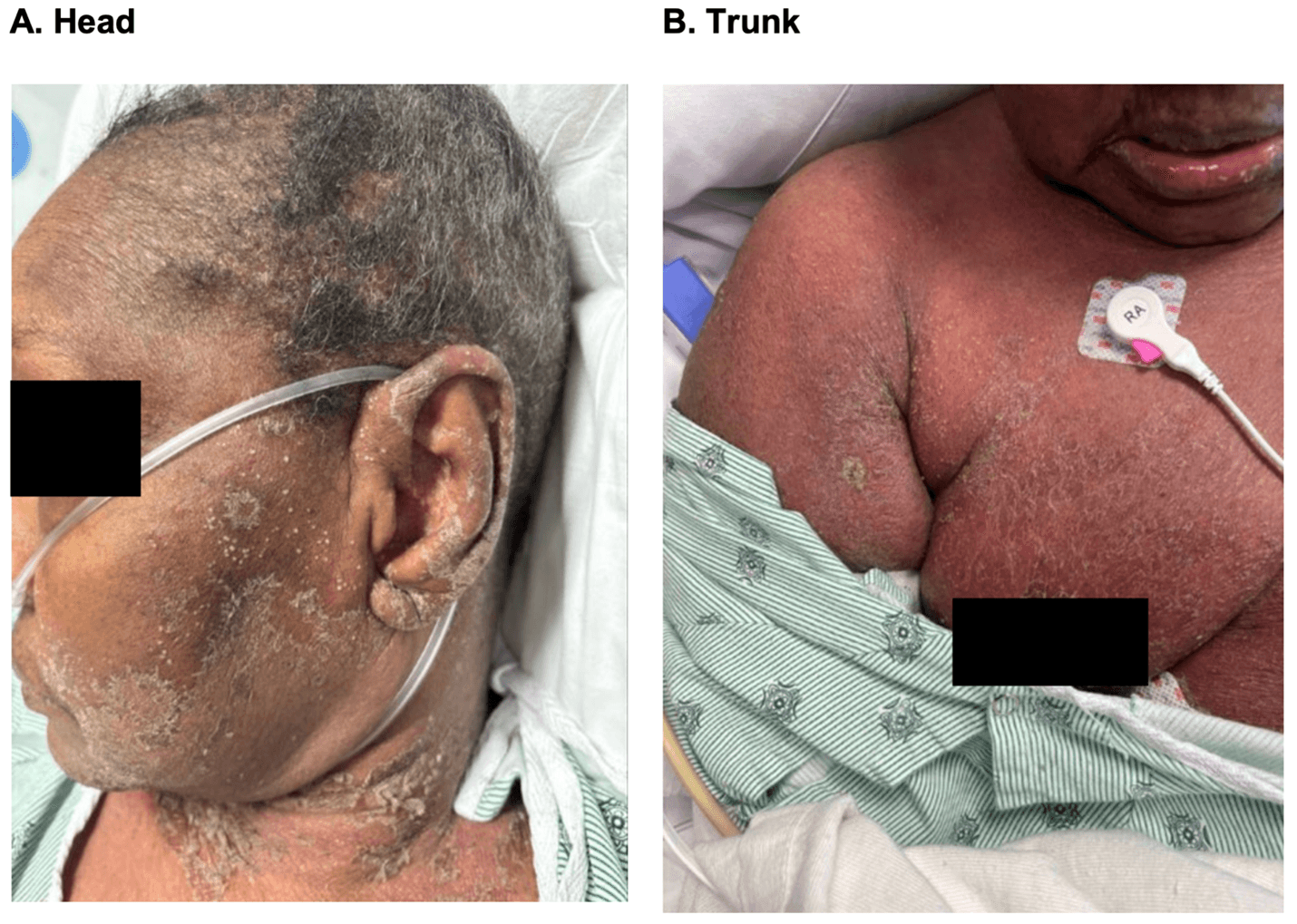
A 72-year-old African American female was admitted for management of a generalized pustular psoriasis (GPP) flare that had been ongoing for 4 weeks prior to admission. She had multiple underlying comorbid conditions including chronic obstructive pulmonary disease, chronic kidney disease, vascular dementia, type 2 diabetes, and diverticulitis. After failure of topical clobetasol ointment, she was given one dose of IV spesolimab 900 mg with rapid improvement in her pustular burden within 48 hours.
However, her clinical picture continued to deteriorate and was complicated by leukemoid reaction (WBC count 48.5 x 10⁹), hypothermia, lactic acidosis, and distributive shock with multiorgan dysfunction with acute kidney injury and pulmonary edema necessitating intubation; these physiologic derangements were felt to be secondary to prolonged severe systemic inflammation due to untreated GPP for 4 weeks prior to admission.
All of these parameters improved with a 4-day course of systemic cyclosporine 5mg/kg, which was employed due to its potent and rapid anti-inflammatory effects. Given persistent erythema, she then received a second dose of IV spesolimab 900 mg, 7 days after her first dose.
As the patient and her daughter expressed a strong desire to avoid any future flares of her GPP, shared decision-making among the patient, her daughter, and the medical team led to the initiation of subcutaneous spesolimab 300 mg every 28 days to prevent future GPP flares. This was felt to be especially important in her case given the severity of her flare and the multiorgan dysfunction precipitated by the flare. The patient continues to do well on subcutaneous spesolimab to this day, which has been well tolerated despite her increasing medical complexity and multiple hospital admissions for other medical issues.
Physical Exam and Lab Results
On initial examination, the patient had robust generalized erythema >90% BSA with innumerable scattered pustules, many in arcuate arrangement. Initial lab testing showed an elevated white blood cell (WBC) count of 20.6 × 10⁹/L. By day 5, she experienced a markedly elevated WBC (48.5 × 10⁹/L), hypothermia (94.4°F), and acute kidney injury (peak serum creatinine 3.54 mg/dL).
Diagnostic Review
Skin biopsy results from her left forearm showed subcorneal pustules, dermal edema, and perivascular lymphocytic and interstitial neutrophilic inflammation. The usual differential of subcorneal pustules was considered, but none fit her condition (eg, acute generalized exanthematous pustulosis, candida infection, dermatitis herpetiformis, IgA pemphigus, impetigo).
The notable feature of this case is the fact that the patient had flaring GPP for 4 weeks before seeking medical care, which not only led to delay in treatment but also led to severe systemic inflammation; this unchecked inflammation ended up causing distributive shock (treated with cyclosporine) and created excess morbidity. The clinician needs to remember the systemic manifestations of severe psoriasis when treating severe pustular psoriasis. When left untreated, erythrodermic physiology due to generalized cutaneous vasodilation can result in high-output cardiac failure, dehydration, electrolyte imbalances, hypothermia, and sepsis, while chronic severe inflammation can result in anemia and malnutrition.
Which of the following patients with psoriasis would you strongly consider starting subcutaneous spesolimab for flare prevention?
Before & After Photos
Treatment Discussion and Outcome
It is imperative to diagnose GPP early and initiate appropriate treatment not only to treat the skin but prevent nonskin morbidity, as occurred in this patient. While some patients with milder presentation of pustular psoriasis may not require systemic treatment between pustular flares, flare prevention should be a cornerstone of treatment in GPP given the debilitating, life-limiting nature of GPP flares and the morbidity patients with GPP can face due to severe flares, especially with advancing age.
The patient in this case continues to do well on subcutaneous spesolimab, which has been well tolerated despite her increasing medical complexity and multiple hospital admissions for other medical issues.